
Legal & Court ASL Interpreting in Austin, TX
Working with legal and court ASL interpreters in Texas requires court certification. 3 Bridges has you covered, we work with some of the best court certified interpreters in Texas, ensuring you stay in compliance with state law.
Court Certified
Serving Texas Statewide
Rapid Response
No Hidden Fees
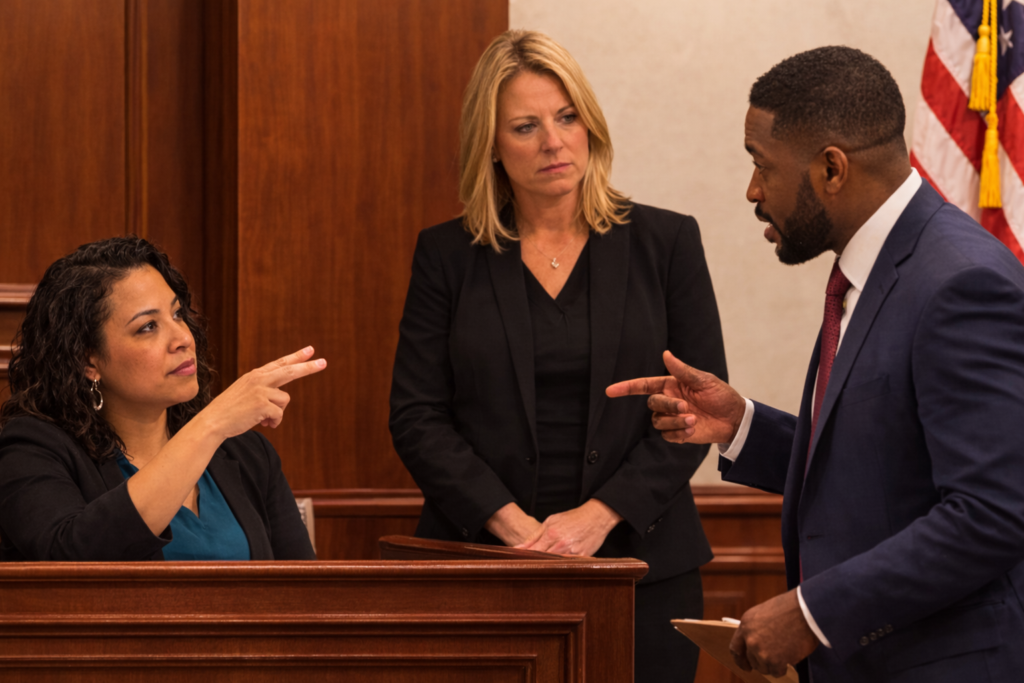
Locally Owned. Texas Rooted.
We’ve been providing ASL interpreters to Texas courts since 2010. When you work with 3 Bridges, you’re working with a local team that knows the Texas legal system and responds quickly when you need us.
- Locally owned and operated.
- Court Certified Interpreters
- Low rates and no hidden fees
- Team interpreting for longer proceedings
Legal Settings We Serve
We provide court certified ASL interpreters for everything from attorney-client meetings to jury trials. Just tell us what you need and when and we’ll handle the rest.
Criminal Trials & Hearings
Arraignments, pre-trial, jury trials, sentencing
Civil Court Proceedings
Motions, bench trials, small claims, appeals
Family Court
CPS hearings, custody, divorce, adoptions
Depositions
Video and in person with court reporters
Attorney Client Meetings
Privileged consultations, case prep
Mediations & Arbitrations
Settlement conferences, negotiations
Immigration Hearings
Meetings, hearings, compliance
Probation & Parole
Asylum, deportation, naturalization
Why Certification Matters for Texas Courts
Texas law requires court certified ASL interpreters for legal proceedings. All assignments on the record require RID or BEI Court certification in accordance with Texas civil and criminal codes.
Our Interpreters
- BEI Court Certified — Texas state certification for court and legal settings
- RID Legal Certified (SC:L) — National certification for legal interpreting
- Background Checked — Criminal background checks and professional liability insurance
Civil Proceedings
Sec. 21.003 requires interpreters to hold a current legal certificate from RID or a court interpreter certificate from BEI.
Criminal Proceedings
Art. 38.31 of the Texas Code of Criminal Procedure requires a qualified interpreter for deaf persons in criminal cases.
How to Schedule Your Interpreter
New customers need to fill out our Rates & Policies Agreement to schedule an interpreter.
1
Fill Out Rates & Policies
New customers complete our Rates & Policies form. Existing customers use the Interpreter Request form.
2
Submit Interpreter Requst
You can now make a request for an ASL intepreter and provide all of the details for the legal assignment.
3
3 Bridges Confirms
3 Bridges matches you with a Legal or Court certified interpreter and sends you a confirmation email.
4
Day Of
Your ASL court certified interpreter arrives ready to go. A clear invoice will be sent after the assignment.
FREQUENTLY ASKED QUESTIONS
Legal & Court ASL Interpreting FAQs
Do you provide court certified ASL interpreters in Texas?
Yes, 3 Bridges provides BEI Court Certified interpreters for all legal and court proceedings in Texas. Texas law requires interpreters working in court settings to hold BEI Court Certification, which requires additional specialized training and testing beyond standard interpreter certification.
Our court certified interpreters are qualified for trials, hearings, arraignments, depositions, mediations, arbitrations, and any on the record legal proceeding where interpretation becomes part of the official court record.
What is the difference between legal rates and court rates?
Court Rates apply to on the record proceedings where interpretation becomes part of the official record and Texas law requires BEI Court Certified interpreters. This includes trials, hearings, depositions, mediations, law enforcement interviews, and recorded proceedings.
Legal Rates apply to off the record settings such as attorney client meetings, case preparation, document review, and consultations. 3 Bridges confirms the appropriate rate based on the details you provide when booking.
What types of legal settings do you provide interpreters for?
We provide qualified legal sign language interpreters, both virtually and in person for the following: court hearings and trials, jury duty, depositions, attorney / client meetings and consultations, mediations, arbitrations, law enforcement interviews and interrogations, parole and probation hearings, immigration proceedings, family court matters and any other legal setting which requires communication access for the client.
Our legal interpreters understand courtroom protocol, legal terminology, attorney client privilege, and the ethical requirements specific to legal interpreting.
Who pays for the interpreter in legal proceedings?
In criminal proceedings, the court typically pays for the interpreter. In civil cases, the party responsible depends on the jurisdiction and circumstances. Attorneys representing Deaf clients may be able to seek reimbursement through the State Bar of Texas Communication Access Fund.
For attorney-client consultations and case preparation, the law firm or attorney typically covers interpreter costs as part of representing their client. We recommend discussing interpreter arrangements early in the representation.
Contact us if you have questions about responsibility for interpreter costs in your specific situation.
How should I prepare for a legal proceeding with an ASL interpreter?
Provide the interpreter with relevant materials in advance: case summaries, witness lists, technical terminology, names of parties involved, and any documents that will be referenced. This preparation significantly improves interpretation accuracy.
Position the interpreter where the Deaf individual can see both the interpreter and the speaker (judge, attorney, witness). Speak at a moderate pace, pause between speakers, and address the Deaf individual directly (not “tell him/her”). Allow extra time for the interpretation process.
For depositions and trials, consider scheduling a brief meeting between the interpreter and the Deaf client beforehand to establish communication preferences.
Why is team interpreting standard for legal settings?
Legal interpreting is exceptionally demanding due to complex terminology, high stakes, rapid pace, and the requirement for verbatim accuracy. Team interpreting (two interpreters) is standard for all legal settings regardless of duration for several reasons:
• Maintains accuracy throughout lengthy proceedings
• Allows interpreters to support each other with unfamiliar terms
• Prevents interpreter fatigue that could affect accuracy
• Ensures continuous coverage without breaks in interpretation
• Meets professional standards and court expectations
Can I use VRI for legal proceedings?
VRI is generally not appropriate for most legal proceedings. Courts typically require on-site interpreters for trials, hearings, and depositions due to the high stakes, need for verbatim accuracy, and potential technical issues with video connections.
VRI may be acceptable for brief attorney client consultations or preliminary discussions, but always confirm with the court before relying on VRI for any official proceeding. The Deaf individual’s preference should also be considered.
Do interpreters maintain confidentiality in legal settings?
Yes, all 3 Bridges interpreters are bound by strict professional codes of ethics that require confidentiality. Interpreters do not disclose any information learned during assignments, including attorney client communications.
Interpreters understand attorney client privilege and their role in protecting confidential communications. They can sign confidentiality agreements or Non-Disclosure Agreements if required by your firm or organization.
What qualifications do your legal interpreters have?
Our legal interpreters hold BEI Court Certification or RID Legal Specialist Certificate (SC:L) as required for court proceedings in Texas. They have extensive experience in legal settings, understand courtroom protocol and procedures, and are familiar with legal terminology.
Legal interpreters also receive ongoing training in legal interpreting ethics, current legal terminology, and best practices for courtroom and legal settings.
How far in advance should I book legal interpreters?
Book legal interpreters as far in advance as possible, ideally two to four weeks for court dates, depositions, and hearings. Court certified interpreters are in high demand and have limited availability.
For urgent legal matters, contact us immediately and we will do our best to accommodate your request. Provide case materials and legal documents in advance so interpreters can prepare for specialized terminology.
Need More Help?
Explore Our Full FAQ
Our full FAQ page covers interpreting, billing, scheduling, legal services, and more.
Helpful Resources
RID Standard Practice Paper
Interpreting in Legal Settings
Communication Access Fund
Reimbursement for civil interpretrng
Texas Civil Code Sec. 21
Interpreter requirements for civil cases
Ready to Schedule a Legal and Court ASL Interpreter?
Contact us today to discuss your ASL Interpreting needs. New customers start by completing our policies and agreement forms.